

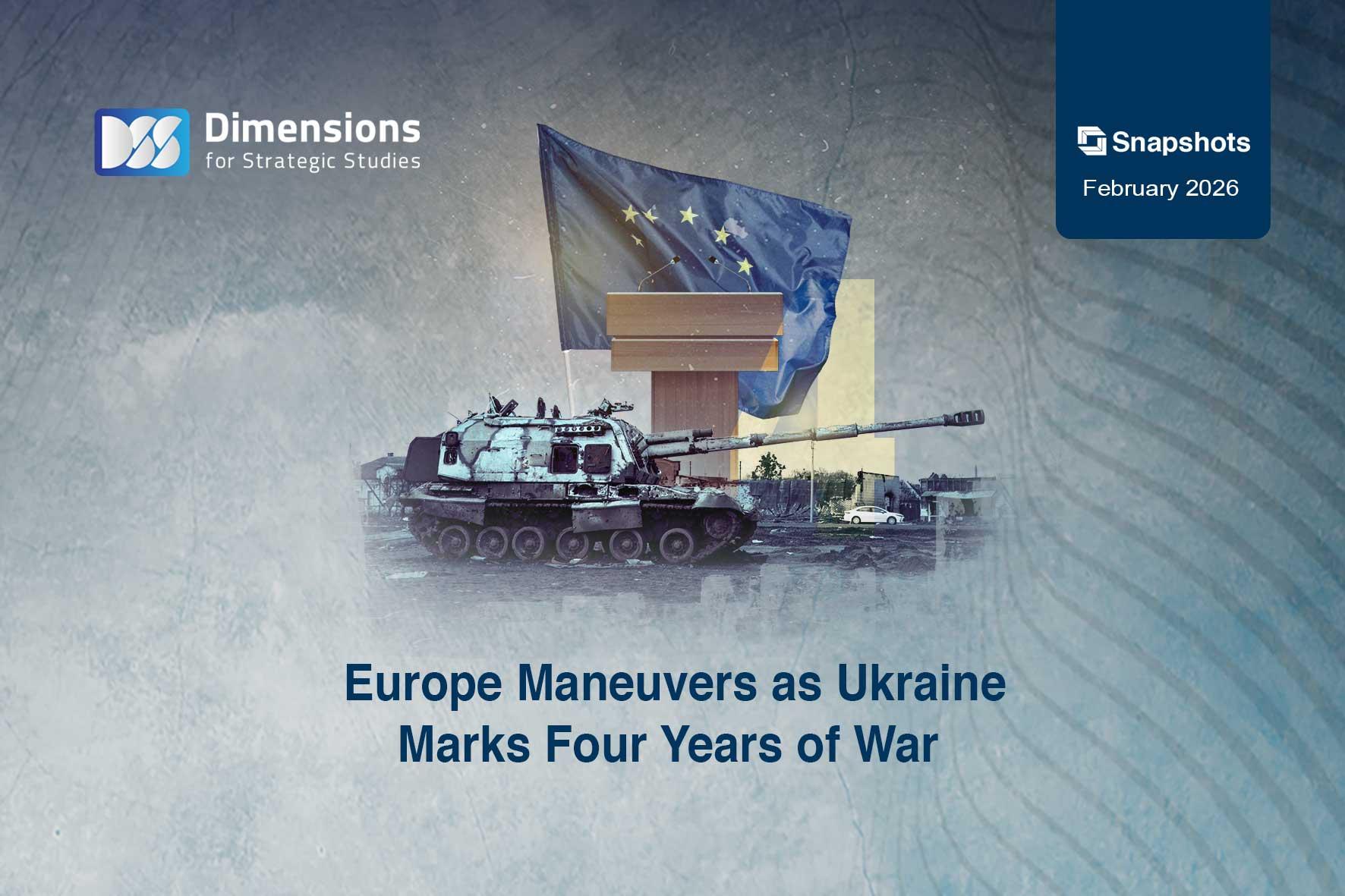
Europe Maneuvers as Ukraine Marks Four Years of War
2026-02-241349 view
The conflict between Russia and Ukraine intensified as its fourth anniversary approached. When Moscow launched its invasion in 2022, it was hoping for a swift, decisive “special operation” to seize a portion of Ukrainian territory. However, the conflict transformed into a protracted war of attrition due to substantial U.S. and European support to Kyiv.
As the war ground into its fifth year, there were significant developments on the ground, most notably a Ukrainian advance on the southern front on February 23, after nearly a year and a half of setbacks on various fronts in the face of Russian attacks.
According to the Ukrainian military, Kyiv managed to recapture approximately 400 square kilometers (150 square miles) of territory in the Dnipro-Petrovsk region. The Ukrainian army also conducted drone attacks on oil facilities connected to Russia’s Druzhba pipeline.
Speaking during a visit to Kyiv to mark the anniversary, European Commission President Ursula von der Leyen reaffirmed the European Union’s unwavering commitment to supporting Ukraine financially and militarily in its conflict with Russia.
Shortly before her visit, British Defense Secretary John Healey announced that Kyiv’s allies had pledged $35 billion in military aid to bolster its air defenses against intensified Russian attacks on its infrastructure.
Norway and France are moving toward an agreement that would allow the Norwegian Ministry of Defense to purchase smart bombs that can be launched from the air at ground targets, as well as surveillance equipment, for the Ukrainian army.
These moves appear intended not only to deter Russia and prevent it from achieving a decisive military victory, but also to send a message to the Trump administration, underscoring the EU’s ability to support Ukraine and challenging Trump’s attempts to bypass Europe countries in its negotiations with Russia aimed at ending the war.
It is worth noting that these steps come at a time of optimism over an agreement between Moscow and Kyiv over a mechanism for monitoring a potential ceasefire, following the latest round of talks in Geneva.
This reflects a clear divergence between European and American visions for ending the war, especially since Ukrainian President Volodymyr Zelenskyy, backed by European countries, pushed to move the talks from the United Arab Emirates to the Swiss diplomatic hub. This came amid European efforts to avoid being frozen out of the negotiating process, and to thwart what Europeans believe are Russian plans to overthrow the Ukrainian government through negotiations and transform Ukraine into a buffer zone between Russia and Europe.
Despite moving the negotiations to Geneva, successive European statements have downplayed the chances of reaching a peace agreement under the current circumstances, emphasizing that Russia is using the negotiations to impose its vision