

Sudan’s Army Regains Upper Hand with New Strategies
2026-02-081775 view
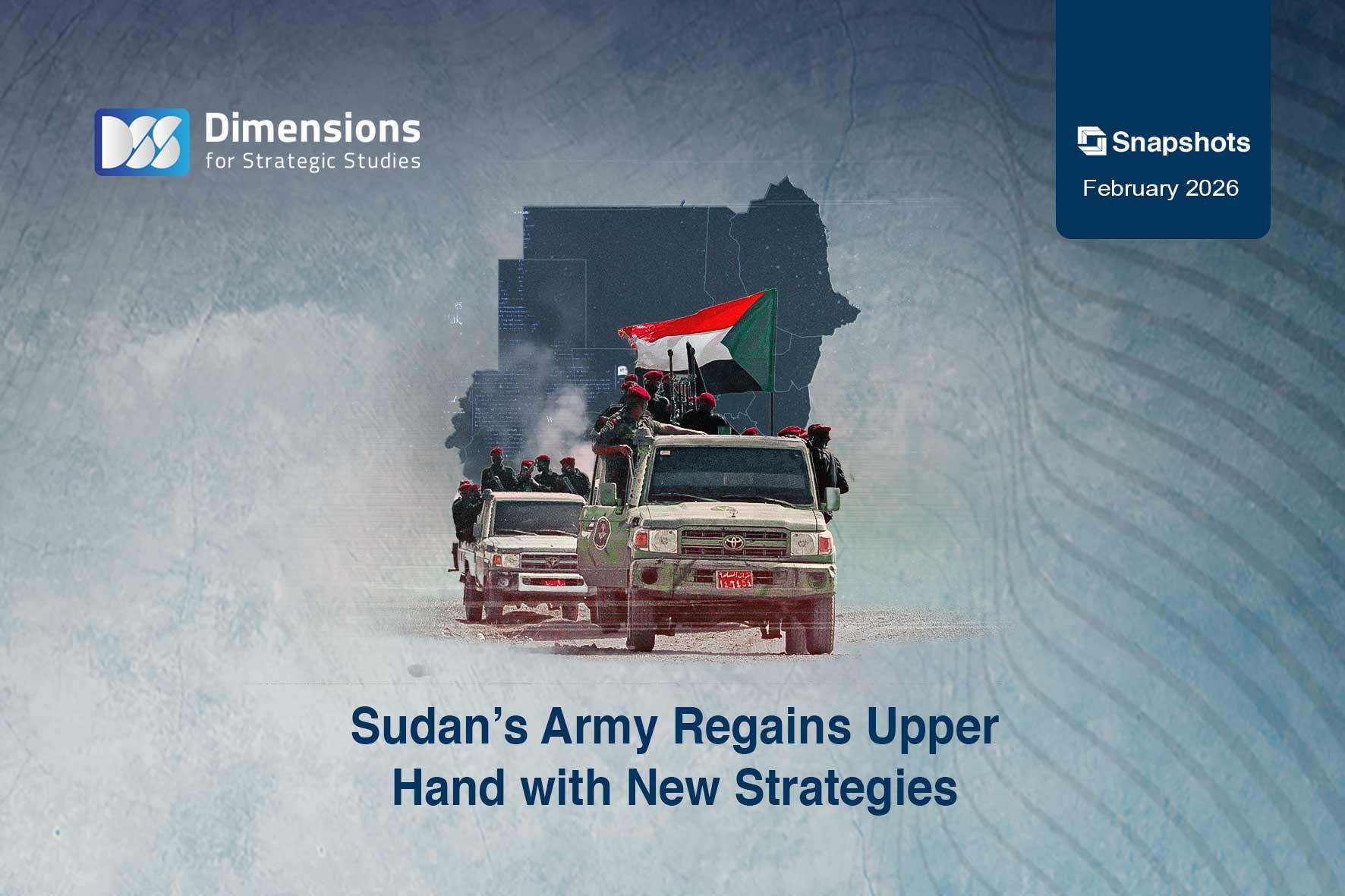
Since late 2025, the Sudanese army has regained the upper hand over the Rapid Support Forces (RSF) and the RSF-allied Sudan Founding Alliance (Tasees) militia, following a period of army setbacks that included it losing the key city of El-Fasher in West Darfur and the town of Heglig in South Kordofan, home to Sudan’s most important oil fields.
On February 6, the Sudanese Armed Forces (SAF) broke the RSF’s months-long sieges of Kadugli and Dilling, the largest cities in South Kordofan state, restoring vital supply lines and communication routes to the south and west of the country.
The army had paved the way for its recent advances with a series of operations focused on weakening the rebels’ hard power by carrying out airstrikes against tribal volunteer recruitment camps run by the RSF in South Kordofan. This appeared to be part of a strategy to dismantle the group’s manpower as well as cutting its supply lines—particularly those linking Sudan to neighboring countries like Chad. This was also achieved through airstrikes, as well as infiltration of tribal volunteer ranks to carry out hit-and-run attacks, and the opening of channels of negotiating with neighboring countries to win them over.
Furthermore, as part of its efforts to destroy or sever its rival’s supply lines, the SAF concentrated its efforts in late 2025 on destroying the infrastructure that is vital to the RSF’s logistical and technical support. Accordingly, its aircraft bombed the Nyala airbase in South Darfur, the RSF’s most important operational support center. This rendered the base, which had housed drone and air defense systems, virtually inoperable.
As it seeks to dismantle the RSF’s hard power and that of its allies, the Sudanese army is also working to contain tribal forces in the areas it recaptures from the RSF. It is avoiding policies of vengeance, in the hope of leveraging the tribes’ manpower in future confrontations—or at least, depriving the RSF of their manpower.
As well as achieving significant battlefield gains and retaking key locations, the SAF has made political gains of late, by reaffirming the persistent capabilities of the Sudanese army and state. This was particularly evident in the advance into the Nuba Mountains, considered a stronghold of the Sudan People’s Liberation Movement-North (SPLM-N) faction led by Abdelaziz al-Hilu, which is allied with the RSF.
Indeed, the latter development could prompt tribes still fighting alongside the RSF to reconsider these alliances, given the army’s demonstrated ability to break RSF sieges and recapture lost territory. This is especially relevant as the army prepares to advance on Heglig, on the border with South Sudan, in a bid to retake it territory it lost several months ago.