

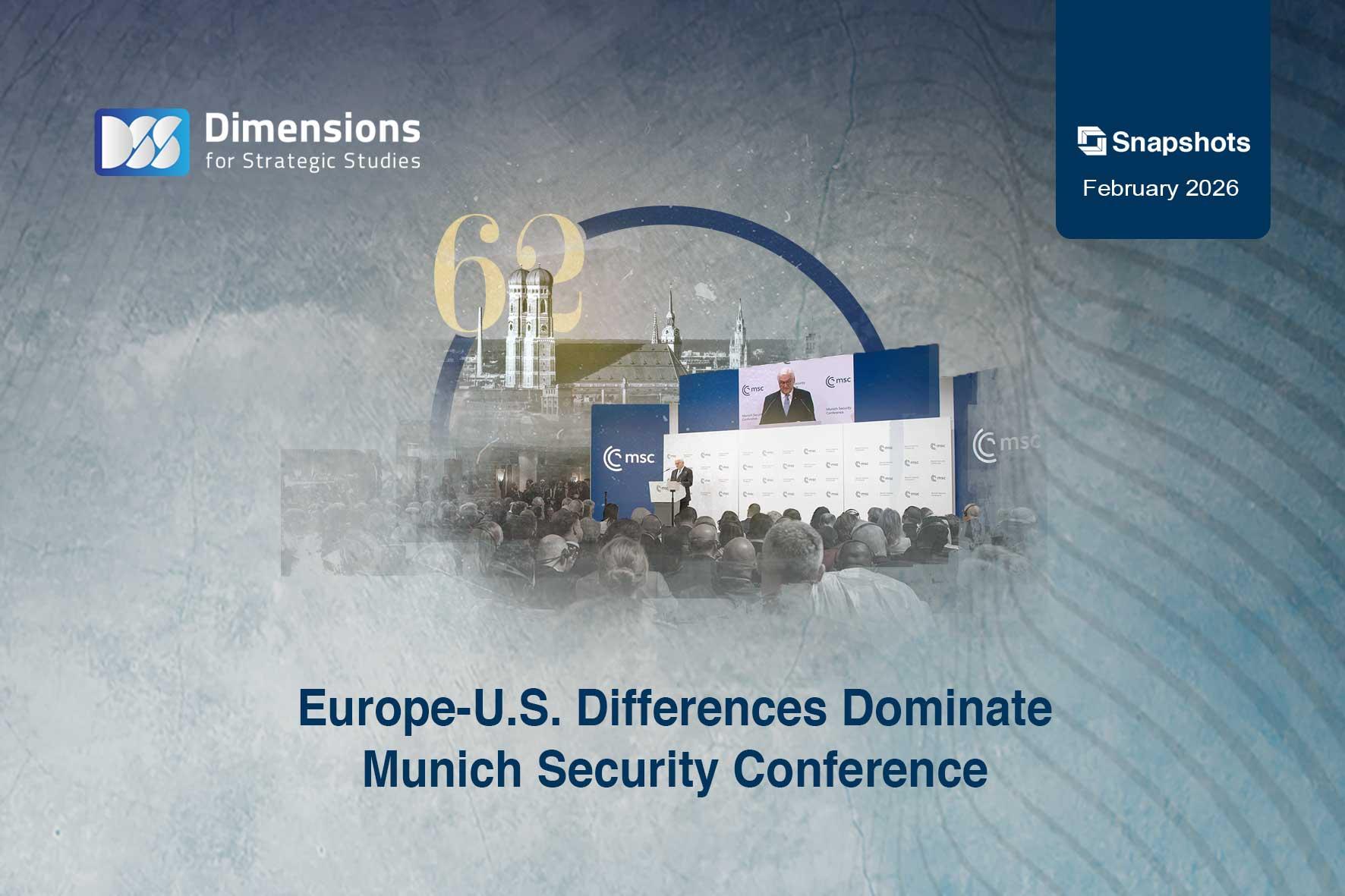
Europe-U.S. Differences Dominate Munich Security Conference
2026-02-162328 view
At this year’s Munich Security Conference, U.S. officials backed down from the confrontational rhetoric of the previous conference, adopting a more diplomatic tone toward Europe and departing from the narrative they had pushed at last year’s conference, that Europe was benefitting from American protection for free—accusations Washington followed up by threatening to annex Greenland.
Addressing the 62nd round of the conference in February, Secretary of State Marco Rubio expressed a desire to reduce tensions between Washington and European countries. Emphasizing his country’s historical roots in Europe, he argued that their destinies are intertwined, and urged leaders to defend Western civilization.
Yet despite such conciliatory rhetoric, statements from European leaders during and after the conference did not suggest that the transatlantic gap had narrowed; in fact, it may be widening. Addressing the summit, French President Emmanuel Macron called for Europe to become a geopolitical power capable of defending Ukraine against Russia and demanded that the U.S. respect Europe, stressing that there could be no real peace in Ukraine without European participation.
German Defense Minister Boris Pistorius also argued that excluding European countries from negotiations concerning the continent’s security would weaken NATO.
Throughout the conference, European leaders sent repeatedly voiced their commitment to developing independent policies, notwithstanding their ability to achieve this goal. This included continued opposition to U.S. President Donald Trump’s proposed Board of Peace, which they deem a unilateral project that sidelines international institutions. Macron told the conference France was resuming communications with Russia, in light of Trump’s attempts to monopolize negotiations with Russian President Vladimir Putin over Ukraine’s future.
Major European countries, including France, are pursuing policies on Syria that are independent from Trump’s vision, notably by supporting the survival of the Kurdish-dominated Syrian Democratic Forces (SDF), albeit within the framework of the Syrian state.
Leaks from intra-European discussions held during the Munich Conference suggest that European leaders believe the Trump administration continues to seek European subservience to the U.S., and the its motives for softening its rhetoric lie in pragmatism and shared interests, not a belief in a common destiny.
It is clear that Trump’s U.S. and European governments are in a state of ideological discord. The U.S. National Security Strategy of 2025 spoke of Europe’s “civilizational decline,” comments that led European countries to believe that the current U.S. administration is hostile to the global liberal order.
Accordingly, European countries are likely to press on with their attempts to expand their independence and formulate security policies that are less reliant on U.S. support. However, such efforts will face obstacles—not least, divisions among Europeans themselves over their priorities. For example, Germany is highly apprehensive of Russia’s growing threat, while France has demonstrated flexibility towards dialogue. Furthermore, dispariies in military industries and technology mean Europe will struggle to achieve full independence from the U.S