

Israel’s Somaliland Recognition Threatens Security Across Africa
2025-12-291613 view
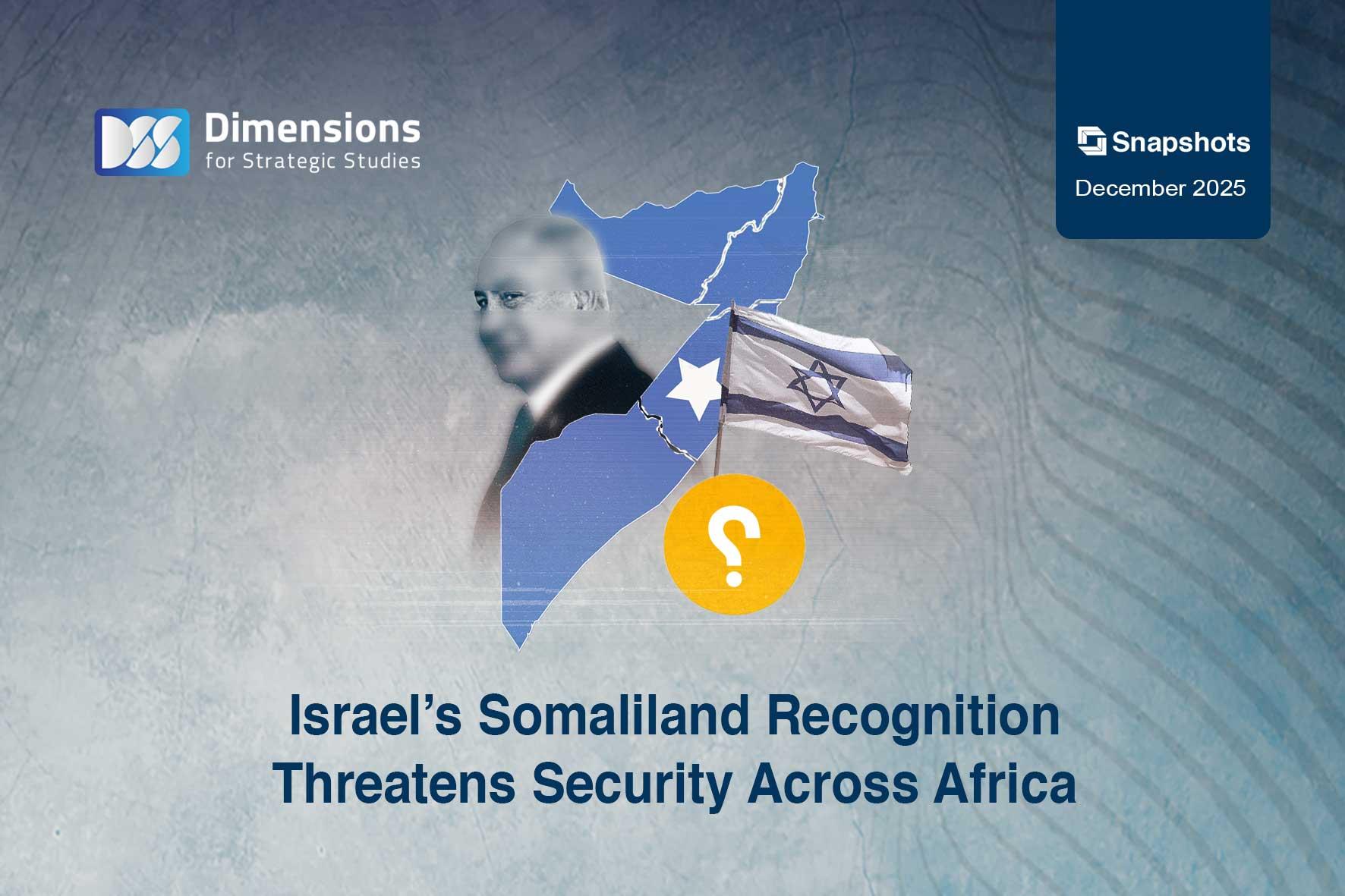
Israel recognized Somaliland as an independent state on December 26. This not only ended the breakaway region’s decades-old diplomatic isolation; it also shattered long-held diplomatic norm, respected by the international community and the African Union, of seeing existing borders as inviolable.
Israel’s decision to become the first major international power to recognize the entity’s independence poses an existential threat to the unity of the Federal Republic of Somalia, representing the most significant challenge to Mogadishu since the collapse of the central government in 1991.
It also threatens to trigger a domino effect, whereby other regional and international powers make similar moves, with implications across the continent and beyond.
The Israeli move could pave the way for similar actions by other regional states—notably Ethiopia, for whom Israel’s recognition represents a green light to activate deals Addis Ababa has signed with Hargeisa to secure sovereign access to the sea, an ambition consistently met with opposition from Mogadishu.
From Israel’s perspective, a foothold in the Gulf of Aden offers invaluable intelligence and military advantages, enabling it to monitor international shipping lanes, contain threats emanating from the Bab al-Mandeb Strait, and counter the influence of Iran and the Yemen-based Houthi movement in the Red Sea.
For the Somali federal government, the move presents the most difficult predicament of the century so far. The loss of international recognition of Somalia’s unity could erode Mogadishu’s sovereign legitimacy and its ability to claim that it represents all regions of the country.
Israeli recognition presents the African Union with a legal and moral dilemma. The organization’s charter explicitly rules out any alteration of existing borders, for fear that this could open the floodgates to fragmentation across the continent.
Somaliland presents itself as a special case—a state that gained independence in 1960 and then voluntarily united with the south. Foreign powers recognizing the breakaway region’s independence may use this as a legal justification for their position. If Hargeisa succeeds in securing further international recognition, this could encourage other separatist movements, threatening to dismantle the African collective security system.
The tension arising from Israel’s move could also weaken security coordination against Al-Shabaab militants. Extremist groups could point to the nature of Hargeisa’s new ally to rally support against it or against the government in Mogadishu, threatening the fragile stability of the entire region.
In the short to medium term, three possible scenarios are likely:
1. Other countries move to recognize Somaliland, a trend that Mogadishu lacks sufficient external support to confront. This could lead it to accept the reality on the ground and limit itself to diplomatic resistance to these recognitions.
2. Mogadishu receives the support of a state or states in the region, enabling it to impose its control over the territories disputed with Somaliland by force. This could lead to an armed conflict that draws in regional actors.
3. The UN Security Council intervenes to impose a negotiated settlement between Mogadishu and Hargeisa under some form of “flexible federalism” and thus prevent the complete collapse of the Somali state.
In general, Israel’s recognition of the Republic of Somaliland is more than a diplomatic gesture: it is a restructuring of the balance of power in the Horn of Africa, shifting the region from a phase of crisis management to one of imposing realities on the ground by force. In response, regional actors must conduct rapid reassessments of their alliances.
The stability of international navigation in the Red Sea and the unity of the Somali state now hinge on the international community’s ability to balance the security interests of Israel and its regional allies against the sovereign rights of Mogadishu and the force of African treaties.