

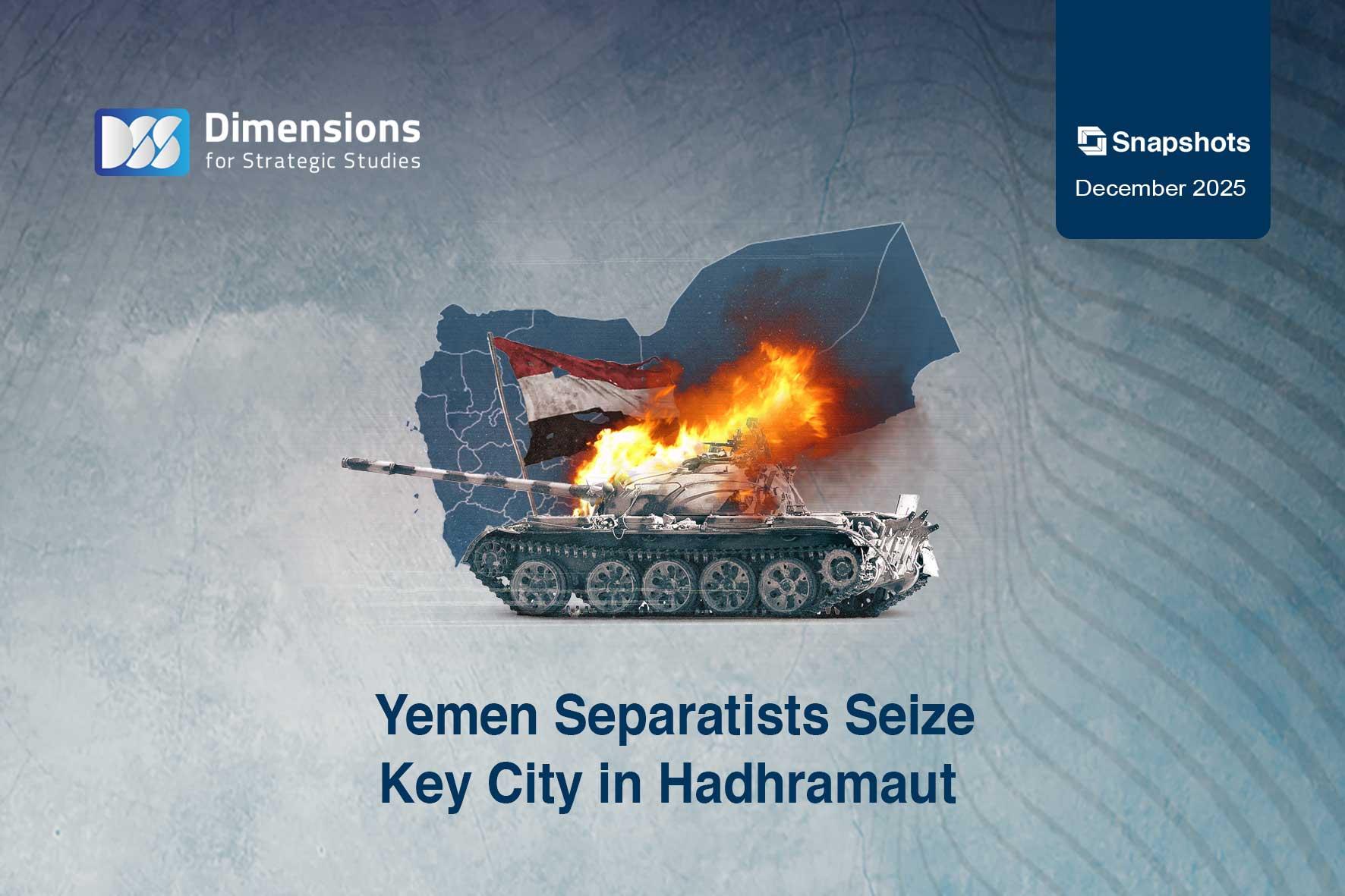
Yemen Separatists Seize Key City in Hadhramaut
2025-12-046011 view
Forces loyal to Yemen’s separatist Southern Transitional Council (STC) seized control of Seiyun, a key city in Hadhramaut Governorate, on December 3. Forces from the army’s First Military Region withdrew as the STC seized the international airport, government offices and the local branch of the central bank.
The fall of Seiyun to the STC, which advocates for the re-establishment of an independent state of South Yemen, marked the loss of the Yemeni army’s last stronghold in southern and eastern Yemen.
This followed months of unrest in the governorate, Yemen’s largest, which reaches from the Saudi border to the Gulf of Aden and is controlled by various armed actors. The tensions included a string of protests led by the Hadramawt Tribal Alliance against local authorities, which escalated in early December when the Alliance’s forces seized control of a local oil facility, forcing it to halt production.
Control of Seiyun opens the way for a likely STC advance on the oil-rich Mukalla plateau, control of which would significantly strengthen the Council’s influence and presence in Yemeni politics.
The latest developments will have medium- and long-term repercussions for Yemen’s internationally recognized government (of which the STC is a member) and its Presidential Leadership Council. The STC is likely to double down on its demands for the PLC’s restructuring to fit the new reality, transforming it into more of a coordination body including representatives from southern, northern, and eastern Yemen. In parallel, the STC will likely consolidate its autonomy in the areas it controls.
Furthermore, the shift could accelerate the disintegration of what remains of the Yemeni National Army, especially as the fall of Hadramawt almost totally cuts off army forces in Marib—east of the Houthi-held capital Sanaa—from the outside world. This would also expand the influence of regional military formations operating independently of the Ministry of Defense, with their local and regional affiliations.
Moreover, the army’s rapid withdrawal from Seiyon with no significant resistance will inevitably further erode local and international confidence in the internationally recognized government and army. This will also pave the way for a new approach to resolving the Yemeni crisis, one more suited to the new status quo.
Finally, it is worth noting that the Houthis, who control Sanaa, will be among the indirect beneficiaries of the Yemeni government’s loss of Sayun and the Hadhramaut governorate. This defeat is therefore a major blow to the government, which is reduced to a virtual entity that no longer represents Yemenis on the ground.