

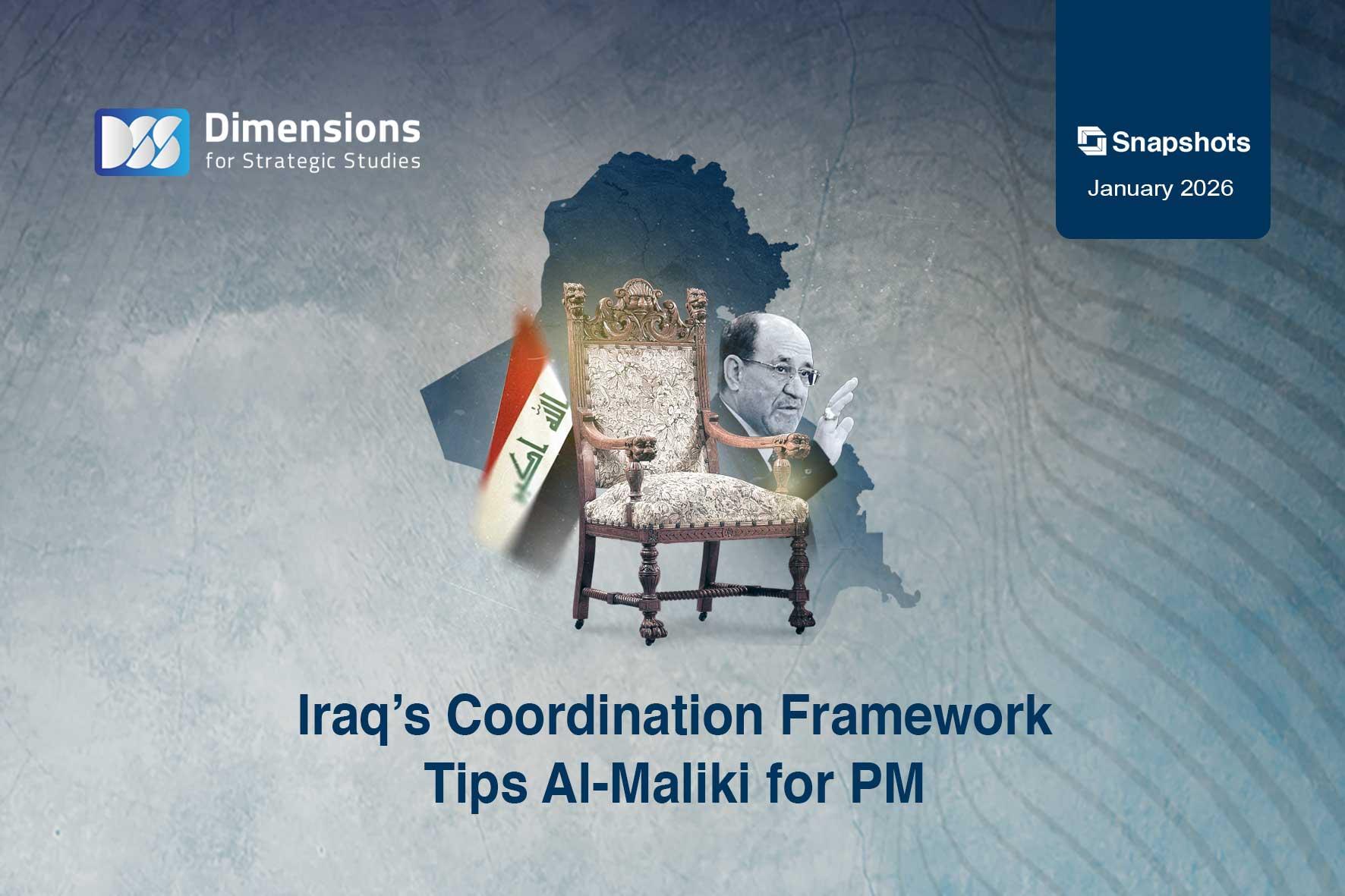
Iraq’s Coordination Framework Tips Al-Maliki for PM
2026-01-263280 view
On January 24, the Coordination Framework, which holds a majority in the Iraqi parliament, announced that it was nominating Nouri al-Maliki for the position of prime minister. This came after months of internal divisions and discussions over the Framework’s candidates for the post since November elections, including with intelligence chief Hamid al-Shatri and the head of the Iraqi Accountability and Justice Commission, Basim al-Badri.
The rapid consensus among Framework members on a joint candidate, despite their previous disagreements, suggests that Iran may have intervened to push for a deal, given Tehran’s influence over the various Shiite blocs within the alliance.
Meanwhile, the U.S. position on al-Maliki remains unclear. Washington had previously criticized the selection for government positions of figures affiliated with certain Iraqi factions to which Al-Maliki is known to be close. Washington has made no official comment has on the matter.
Tehran likely views Maliki as a bulwark against any attack on its remaining influence in Iraq, particularly the fate of armed factions linked to Tehran. Iran’s influence in the country peaked during Al-Maliki’s two previous terms as prime minister.
Iran is clearly apprehensive about its remaining influence in the region, having lost a key ally in Syria’s Assad regime, severe military and economic pressures on the Houthi group in Yemen, and the weakening of Hezbollah in Lebanon since the war in 2024. This gives Tehran reasons to push for a more reliable figure for the position of prime minister to replace Mohammed Shia al-Sudani, who largely aligned himself with the American vision for change in Iraq.
Iran’s support for Maliki’s premiership does not necessarily mean that Tehran will push Iraq toward escalation, nor that Maliki will lead a rebellion against American efforts to restructure Iraq’s armed factions and end the proliferation of weapons outside the control of the Iraqi state, something the Trump administration has demanded since retaking office.
That said, Tehran is likely to rely on Maliki to oversee a process of integration that preserves the presence of Iranian-backed Iraqi factions within Iraq’s official military and security institutions. This will also serve the interests of Iraqi Shiite political forces, which view these factions as a guarantee of their continued predominance, despite some disagreements between political and military factions.
The U.S. is unlikely to move directly to obstruct al-Maliki’s election as prime minister. Instead, it may seek an understanding under which it would refrain from blocking his candidacy, in exchange for a commitment to ending the proliferation of weapons outside state control and to leveraging his influence over armed factions—over which he has greater clout than his predecessor, Al-Sudani. Meanwhile, Washington would overlook, for the time being, the details of how the weapons integration process would be implemented, in exchange for a guarantee of further such moves at a later stage.
Iraq’s Sunni political forces are among the most apprehensive about Al-Maliki’s nomination for prime minister, given the abuses the armed factions committed against Iraqi Sunnis during his previous terms. However, these forces do not appear to have many options, especially given indications that the Kurdistan Democratic Party (KDP) will support Al-Maliki’s candidacy in exchange for securing the presidency for its candidate, Fuad Hussein. Furthermore, forces within the Framework will struggle to align with the Sunni position and obstruct Al-Maliki’s selection through parliament, because this would put them at odds with Iranian interests.